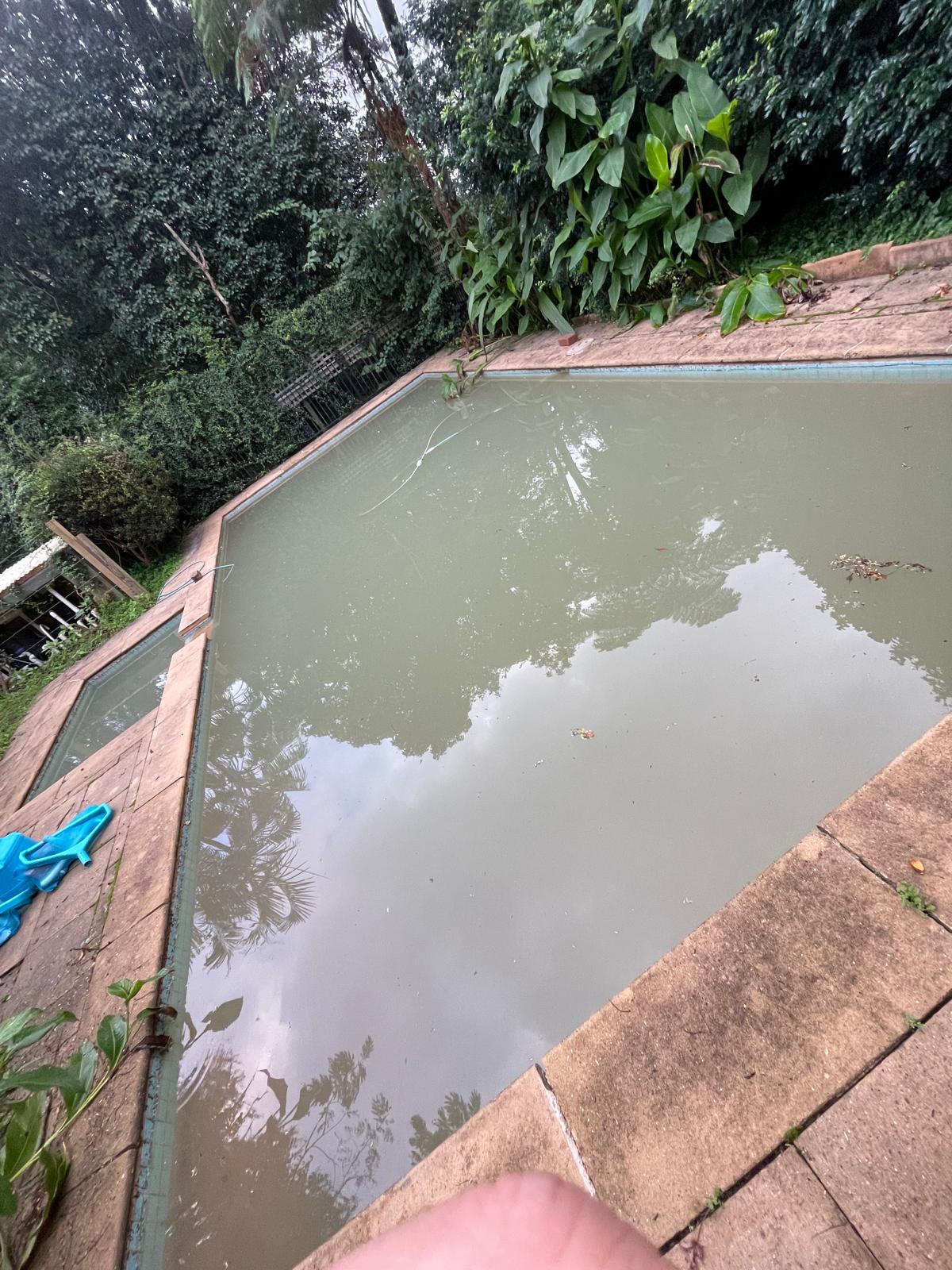
What the green actually is
Green pool water is algae — millions of microscopic plants blooming in the water. Algae spores are always present in pool water, carried in by wind, rain, swimmers and even fill water. They're not the enemy by themselves; the enemy is the condition that lets them explode: insufficient sanitiser.
When chlorine (or your chlorinator's output) drops below what's needed for your pool's conditions — heat, sun, bather load — algae multiply fast. In Melbourne's summer, a pool can go from slightly dull to fully green in as little as 48 to 72 hours.
The usual suspects
Almost every green pool traces back to one of a handful of causes:
- Chlorine ran out — hot weather, heavy use or a simple missed dose
- A salt chlorinator that stopped producing (scaled or worn cell, low salt)
- A pump or timer failure that stopped circulation
- A clogged filter that can't clear the water
- Heavy rain diluting and unbalancing the water
- Winter neglect — months of no testing while the pool sat idle
Not all green is equal
The shade of green tells an experienced eye a lot. Light, bright green usually means a recent bloom that will respond quickly to treatment. Dark, murky green — where you can't see the bottom in the shallow end — means the algae population is dense and the recovery will take staged treatment over a week or more.
Yellow or mustard-coloured patches clinging to walls are a tougher, brush-resistant variety. Black spots that smear when brushed are black algae, which roots into the surface and needs aggressive, targeted treatment. Each type changes the recovery approach, which is why a proper assessment comes before any chemicals.
The recovery sequence that actually works
The most common DIY mistake is dumping in a huge amount of chlorine, watching the pool turn cloudy blue-grey, and assuming the job is done. That cloudiness is dead algae — and without the next steps, the pool either stays murky for weeks or bounces straight back to green.
- Test and balance first — pH in range makes chlorine dramatically more effective
- Shock treatment at the correct dose for the pool's volume and algae severity
- Brush every surface to break algae's protective layers
- Run filtration continuously, cleaning or backwashing the filter as it loads up
- Clarify or floc the dead algae so the filter can remove it
- Re-test and rebalance once the water clears
Why green pools bounce back
A pool that turns green again within a fortnight of 'successful' treatment is telling you the cause was never fixed. Killing algae treats the symptom; the bloom happened because something allowed sanitiser to fail — a chlorinator cell at the end of its life, a pump running too few hours, a filter channeling water straight through worn media.
This is the part professional recovery adds that DIY usually misses: after the water clears, we identify and address why it happened. Sometimes that's as simple as a dosing schedule; sometimes it's a worn cell or tired filter media. Fix the cause and the green doesn't come back.
Should you drain and start over?
Almost never. Draining is expensive, wasteful, and genuinely risky — an empty pool in the wrong ground conditions can lift, crack or pop out of the ground entirely. Modern staged treatment recovers the overwhelming majority of green pools without draining, at a fraction of the cost.
The rare exceptions are pools with years of accumulated contamination or severe chemical damage — and even then, we'd assess and explain before ever recommending it.
Can you fix a green pool yourself?
For a light, recent bloom — water still translucent, green only a few days — a capable owner sometimes can. The catch is that DIY attempts usually fail on the details: dosing without knowing the pool's true volume, skipping the pH correction that makes chlorine effective, or stopping filtration too early so dead algae lingers and re-blooms.
The economics deserve honesty too. By the time you've bought shock treatment, algaecide and clarifier — possibly twice, after the first attempt stalls — and run the pump continuously for a week, the gap between DIY and professional recovery narrows considerably. For dark green or long-neglected pools, professional treatment is almost always cheaper than repeated DIY attempts.
What professional recovery includes
A proper green pool recovery is more than chemicals. We start with an assessment — algae type and severity, water chemistry, and the condition of your filtration, because a filter that can't clear dead algae stalls any recovery. Treatment is then staged over days: precise dosing, thorough brushing, continuous filtration with regular filter cleaning, and clarifier or flocculant where the water needs it.
Just as importantly, we identify the cause. A green pool is a symptom of failed sanitiser, circulation or filtration — and if that cause isn't fixed, you'll be green again within weeks. Our recovery service ends with the pool clear, balanced, and the underlying problem addressed, plus straightforward advice on keeping it that way.
Health and safety: is green pool water dangerous?
Yes — this is the part owners most often underestimate. Algae itself isn't the main danger; it's what low sanitiser allows. When chlorine has collapsed enough for algae to bloom, bacteria and other pathogens survive in the same water. Ear, eye and skin infections and stomach illness are all realistic outcomes of swimming in an unsanitised pool.
Green water also hides the bottom — you can't see depth changes, toys, or a struggling swimmer. Nobody should swim in a green pool, full stop, and that includes 'just a quick dip' while it clears. Keep everyone out until the water is clear, balanced and properly sanitised.
How long until we can swim again?
The honest answer is: when the water is clear and the chemistry says so — not a fixed number of days. Light blooms are often swimmable within a few days of correct treatment. Heavy recoveries need a week or more, with the final chemical levels settling back into safe range after the aggressive treatment phase.
We always confirm with a final test rather than a guess. Clear water with sanitiser back in range and pH balanced is the green light — anything earlier is premature.
After the recovery: the first fortnight
The two weeks after a green pool clears are when comebacks happen, because the water is clear but not yet stable. Chlorine demand stays elevated as the last organic residue burns off, filter media is still catching fine dead algae, and chemistry needs closer watching than usual.
This is why we schedule a follow-up check after every recovery — re-testing, inspecting the filter again, and confirming sanitiser is holding between visits rather than drifting. A recovery isn't finished when the water looks clear; it's finished when the water stays clear on its own.
Prevention is boring — and that's the point
Pools that never go green share unglamorous habits: consistent sanitiser levels, daily circulation, a clean filter, and regular testing that catches drift before bloom. Whether you do it yourself or have us on a schedule, that consistency is the entire secret.
If your pool is green right now, take a few photos and request a quote — we'll assess the severity, give you a realistic timeframe, and recover it properly, cause included.
Talk to Melbourne's pool care specialists.
Cleaning, maintenance, equipment repairs and heater installation across Greater Melbourne.