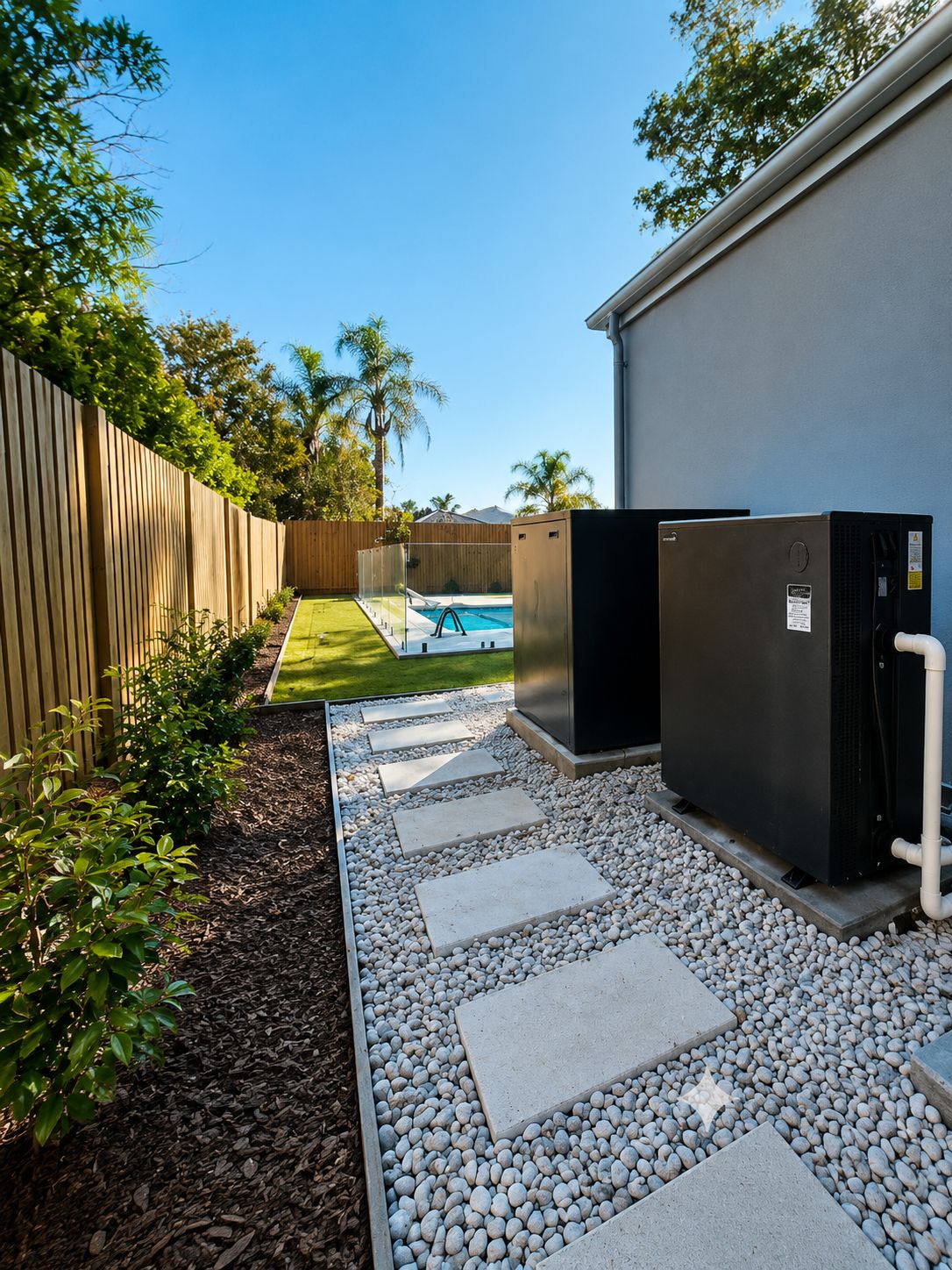
Why Melbourne pools need heating
Melbourne's climate is the core issue for local pool owners: even in mid-summer, unheated pools rarely sit above the low twenties, and the comfortable swimming season without heating is barely three months. For most families, that means an expensive asset that gets used a dozen times a year.
A correctly chosen pool heater changes that equation completely, stretching comfortable swimming from early October through to April — and with the right setup, well beyond. The question isn't really whether to heat a Melbourne pool, but which heating type makes sense for how you use it.
The three main types of pool heater
Each heating technology has a distinct personality. Understanding the trade-offs upfront saves expensive regrets later.
- Heat pumps — move heat from the air into the water. Cheapest to run for everyday use, slower to heat, work best with a cover and regular use.
- Gas heaters — burn natural gas or LPG to heat water fast. Ideal for occasional, on-demand heating (spas especially), but the most expensive to run per degree.
- Solar heating — uses roof-mounted collectors and your pump. Very cheap to run in strong sun, but useless overnight, in shade or through Melbourne's cloudy stretches.
Why heat pumps win for most Melbourne homes
For the way most Melbourne families actually swim — regularly, across a long season — heat pumps have effectively won the argument. A modern full-inverter heat pump delivers three to five units of heat for every unit of electricity it consumes, which no gas heater can approach. That efficiency shows up directly on your power bill.
Melbourne's mild spring and autumn air temperatures are exactly where heat pumps perform well. They don't need scorching days — even at 15°C air temperature, a good inverter unit keeps producing heat efficiently. Combined with a pool cover, a heat pump turns April and October into genuine swimming months.
Solar still has a place for owners with perfect north-facing roof space and modest expectations, and gas remains the right tool for heating a spa quickly on demand. But as the primary heater for a family pool, the inverter heat pump is the default answer for good reason.
Sizing: the decision that matters more than brand
An undersized heater is the most common and most expensive mistake in pool heating. A unit that's too small runs constantly, wears itself out, and still leaves the water lukewarm on cool nights. Sizing depends on your pool's volume, its exposure to wind, whether you use a cover, and how many months of the year you want to swim.
As a rough frame, residential Melbourne pools typically need somewhere between 11kW and 40kW of heating capacity — but the spread within that range is enormous, which is why guessing doesn't work. Our online Pool Heat Pump Calculator gives you an instant estimate based on your pool size, target temperature, usage months and cover, and we confirm the final sizing on site before installation.
The cover question
If a heater is the engine, the cover is the fuel tank. An uncovered pool loses most of its heat overnight through evaporation, which means the heater spends the next morning replacing what escaped rather than adding new warmth. A quality pool cover can cut overnight heat loss by more than half.
We consider a cover part of the heating system, not an accessory. When we quote an installation, we'll talk through cover options at the same time — the combination is what delivers the low running costs heat pumps are famous for.
Running costs in real terms
Running cost depends on heater size, electricity rate, target temperature, months of use and cover habits — so any article quoting a single dollar figure is oversimplifying. What we can say: a correctly sized inverter heat pump on a covered pool typically costs a fraction of what a gas heater would charge for the same comfort, and our calculator lets you test the numbers with your own electricity rate.
The bigger risk to your budget is a poor installation — wrong size, bad positioning, no bypass — which inflates running costs for the life of the unit. Professional sizing and installation pay for themselves.
Which brands to consider
Rather than pushing one brand, we supply and install heat pumps from several trusted manufacturers — including Madimack, Neptune and Henden — and recommend the unit that best suits your pool size, budget and performance requirements. Different pools and budgets genuinely suit different units, and a supplier with options gives you a better answer than one locked to a single range.
Heat pump features worth paying for
Not all heat pumps are equal, and a few features make a genuine difference to daily life. Full-inverter technology tops the list — inverter units ramp their output up and down smoothly instead of slamming on and off at full power, which means quieter operation, lower running costs and less wear on components.
Noise rating matters more than brochures suggest. A heat pump runs for many hours a day, often near bedrooms or a neighbour's fence, so a unit that's quiet at full tilt is worth real money in built-up suburbs. Smart controls and Wi-Fi connectivity are genuinely useful too — being able to check and adjust your pool temperature from your phone means you only heat when you'll actually swim.
Finally, look at warranty and local support. A strong parts-and-labour warranty from a brand with Australian support turns a fault into an inconvenience rather than an ordeal. It's one of the reasons we only supply brands we can stand behind.
Installation: what good looks like
A heat pump's performance depends heavily on how it's installed. The unit needs clear airflow around it — cramped corners and enclosed boxes strangle efficiency and shorten its life. It needs a solid, level pad, correct plumbing with a bypass so the unit can be isolated for servicing, and sensible positioning relative to your equipment and power supply.
A good installer also commissions the system: checking flow rates, setting the controller correctly, and walking you through day-to-day operation. When we install a heat pump, all of this is standard — and we'll tell you honestly if your existing plumbing or electrical setup needs attention before the unit goes in.
Common buying mistakes to avoid
The first mistake is buying on upfront price alone. The cheapest unit on the market costs more within a few seasons through higher power bills and shorter life — efficiency ratings and warranty length are worth far more than a small saving at purchase.
The second is skipping the site assessment. Wind exposure, shade, distance to the equipment pad and power supply all affect which unit and which size is right — buying online without that assessment is how pools end up with heaters that never quite perform. Get the pool looked at, get sized properly, and the rest of the decision becomes easy.
The bottom line
For most Melbourne homes: a full-inverter heat pump, sized properly, installed professionally, paired with a cover. That combination delivers the longest season at the lowest running cost. Start with the calculator for an instant estimate, then get in touch for an on-site assessment and a properly tailored quote.
Talk to Melbourne's pool care specialists.
Cleaning, maintenance, equipment repairs and heater installation across Greater Melbourne.