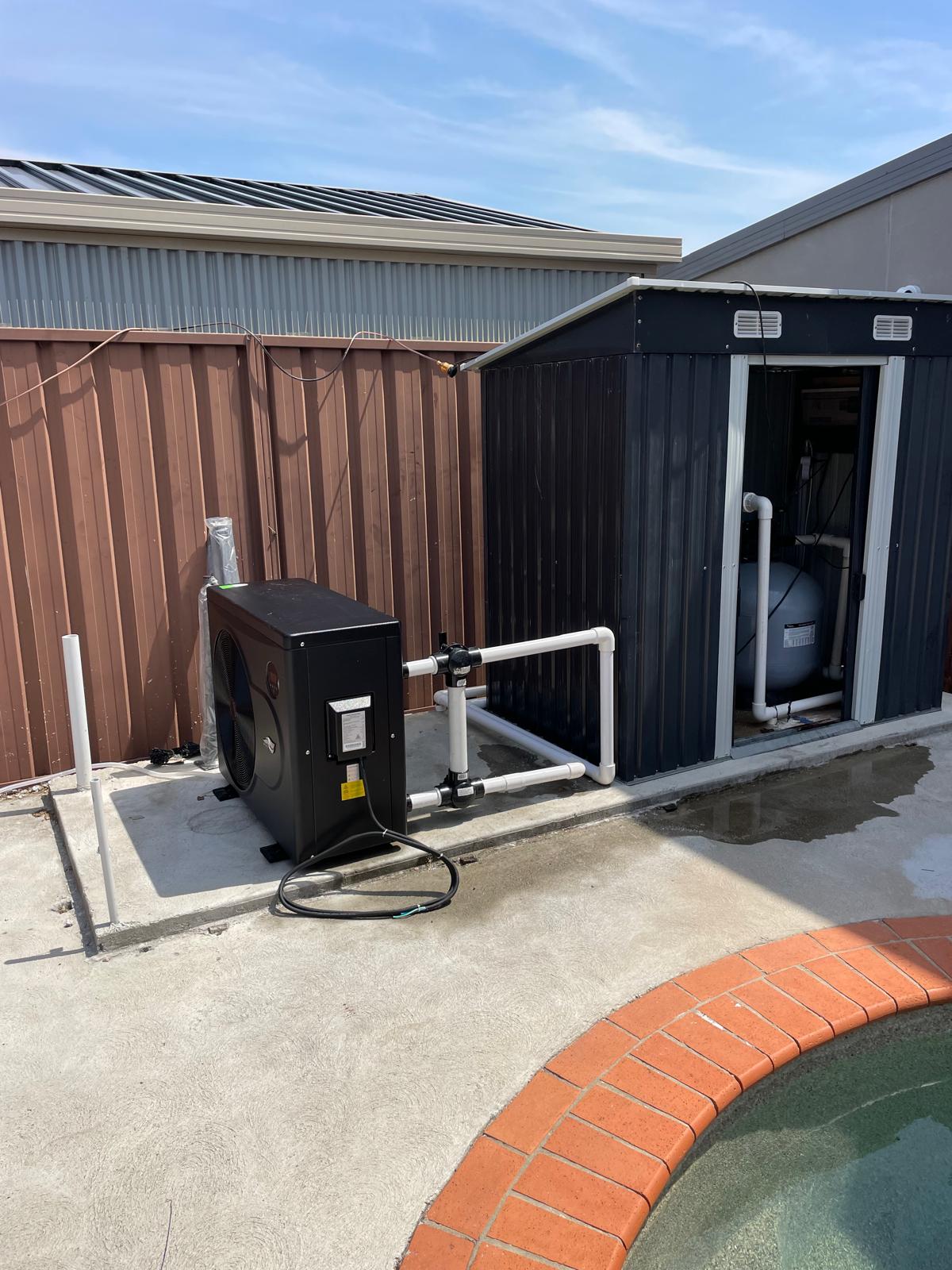
Two very different ways to heat water
Gas heaters and heat pumps both warm your pool, but they do it in fundamentally different ways — and that difference drives everything else about owning them. A gas heater burns fuel to create heat directly. A heat pump harvests warmth from the surrounding air and concentrates it into your pool water.
That single distinction — creating heat versus moving it — is why the two technologies have almost opposite strengths. Understanding them properly is the difference between a heating system you love and one you resent every bill.
Running cost: the decisive difference
This is where heat pumps dominate. A modern full-inverter heat pump delivers roughly three to five times more heat energy than the electrical energy it consumes, because it's moving existing heat rather than making it. A gas heater, at best, converts around 80–90% of its fuel into pool heat.
In practical terms, keeping a Melbourne pool at swimming temperature through the shoulder seasons costs several times more with gas than with a heat pump. Gas prices have also risen sharply in recent years, widening the gap further. For regular, season-long heating, gas is simply difficult to justify on running cost alone.
Heating speed: where gas fights back
Gas has one genuine superpower: speed. A gas heater can lift a spa to temperature in under an hour and add noticeable warmth to a pool in a day. A heat pump works gradually — think of it as maintaining temperature rather than creating it on demand.
This makes gas the right answer for one specific use case: occasional, on-demand heating. If you only heat a spa for Saturday night, or only warm the pool for the odd weekend, gas delivers heat exactly when you want it without running all week. For everything else, the heat pump's slow-and-steady approach wins comfortably.
Upfront cost and installation
Gas heaters typically cost less to buy than quality inverter heat pumps, which sometimes tempts buyers into the wrong decision. The purchase price is a small fraction of the lifetime cost of pool heating — running costs dominate completely, and they favour the heat pump within a season or two of regular use.
Installation differs too. Heat pumps need good airflow, a solid pad, correct plumbing with a bypass, and an appropriate electrical supply. Gas heaters need gas line work by a licensed gas fitter and flueing considerations. Both are straightforward when planned properly; both cause years of inefficiency when done cheaply.
Lifespan and reliability
A quality heat pump, serviced annually and protected by balanced water, commonly delivers well over a decade of service. Gas heaters have more aggressive internals — burners and heat exchangers exposed to flame and corrosive pool water — and typically need attention sooner.
Whichever you own, water chemistry is the silent killer of heaters. Corrosive or scaling water destroys heat exchangers in both types, which is one more reason consistent professional water balancing protects your heating investment.
Melbourne's climate verdict
Melbourne is heat pump country. Our mild springs and autumns — cool nights, moderate days — suit heat pumps perfectly, because there's always usable warmth in the air to harvest. Solar struggles with our cloudy stretches; gas wins only the niche cases.
Our recommendation for most households: a full-inverter heat pump as the primary heater, a cover to hold the warmth in, and gas only where rapid spa heating is a genuine priority. Some larger installations run a heat pump for the pool and a small gas unit for the spa — a combination that plays to each technology's strength.
Side-by-side summary
If you take one snapshot from this article, make it this one:
- Heat pump — lowest running cost, gradual heating, best for regular swimmers and long seasons
- Gas — fastest heat on demand, highest running cost, best for spas and occasional use
- Heat pump + cover — the combination that delivers the longest season per dollar
- Gas + heat pump together — a legitimate setup for pool-plus-spa households
- Either technology — dies young in unbalanced water; chemistry protects the investment
Which one for your situation?
A family that swims most weekends from October to April: heat pump, no contest — the running-cost gap is too large to ignore across a long season. A household that mainly heats a spa on Friday nights: gas, because speed is the whole point and total usage is small.
A pool-and-spa combination used heavily in winter: consider both — a heat pump holding the pool at temperature and gas for rapid spa boosts. And if budget is genuinely tight upfront, a smaller heat pump with a disciplined cover routine beats a gas heater that you're afraid to turn on. The worst outcome is a heater that sits unused because every hour of operation feels expensive.
What about solar pool heating?
Solar deserves an honest mention because Melbourne owners ask about it constantly. Roof-mounted solar matting costs very little to run when the sun is shining, and for some homes it works well as a season-extender. Its limits are structural: it only heats while the pump runs in daylight, it needs suitable unshaded roof area, and Melbourne's long cloudy stretches — precisely when you most want heat — are exactly when solar delivers least.
Solar also can't maintain a set temperature the way a heat pump does; it takes what the day gives it. For owners who want reliable, on-demand warmth across a long season, solar works best as a supplement rather than the primary heater.
Noise, placement and your neighbours
One practical difference rarely discussed: where these units live. Gas heaters are compact and quiet in operation but need flue clearances and gas supply. Heat pumps need generous airflow — a metre or more of clear space in front of the fan — and even quiet models produce a steady fan sound during long daily run times.
In Melbourne's inner suburbs, where equipment often sits a metre from a boundary fence, placement and noise rating genuinely matter. We assess positioning as part of every installation so the heater works efficiently and stays on good terms with the neighbours.
Energy tariffs and off-peak running
A factor unique to heat pumps that's worth understanding: because they run on electricity, when they run matters. Households on time-of-use tariffs can schedule filtration and heating through off-peak or solar-generation hours, cutting running costs further without any change to the equipment. Homes with rooftop solar get the best deal of all — a heat pump running through sunny midday hours effectively heats the pool on sunshine.
Gas has no equivalent lever: a megajoule costs the same at noon as at midnight. If you're on a flexible electricity plan or have solar panels, that flexibility should count in the heat pump's favour when you run your numbers.
Still unsure? Run your own numbers
Every pool is different, so generic advice only goes so far. Our free Pool Heat Pump Calculator estimates the right capacity for your pool and shows estimated monthly running costs — you can even adjust the electricity rate to match your own plan. Then, when you're ready, we'll assess your pool on site and give you a straight recommendation with both options costed honestly.
Talk to Melbourne's pool care specialists.
Cleaning, maintenance, equipment repairs and heater installation across Greater Melbourne.