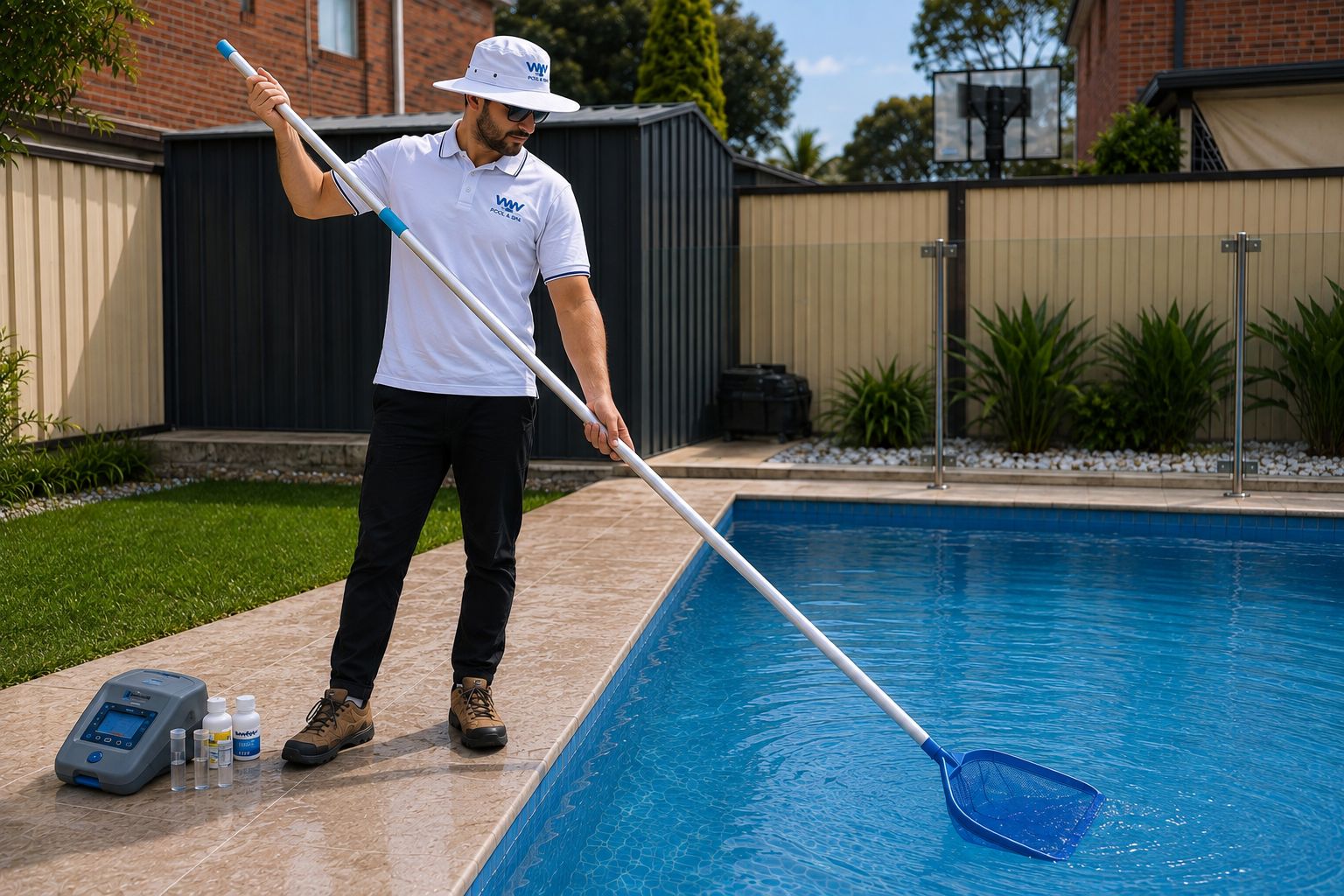
How to use this checklist
Pool maintenance isn't complicated — it's cumulative. Small tasks done on schedule prevent the big, expensive problems that come from neglect. This checklist breaks the work into weekly, monthly and seasonal rhythms matched to Melbourne's climate.
Print it, save it, or hand the whole thing to us — either way, knowing what should happen (and when) makes you a smarter pool owner.
Every week (swimming season)
These are the non-negotiables while the pool is in use:
- Test chlorine and pH; dose as needed
- Skim the surface for leaves and debris
- Empty skimmer and pump baskets
- Check the pump is running its full schedule
- Quick visual check of water clarity and level
- Brush walls and steps if you can — algae starts as invisible film
Every fortnight to month
Slightly deeper tasks that keep the system honest:
- Full water test — alkalinity, calcium hardness and stabiliser, not just chlorine and pH
- Vacuum the pool floor thoroughly
- Brush walls, steps and the waterline properly
- Check filter pressure; backwash or clean when it climbs 40–50 kPa above its clean baseline
- Inspect the salt cell for calcium build-up
- Top up the water level to mid-skimmer
Seasonal jobs that protect your equipment
Melbourne's seasons each bring one or two jobs that matter far more than they look:
- Spring: full service before the season — equipment check, deep clean, balance, and filter inspection
- Summer: watch sanitiser consumption during heatwaves; check baskets after storms
- Autumn: increase skimming frequency as leaves drop; clean the filter thoroughly before winter
- Winter: monthly professional check; confirm the chlorinator's winter output setting; inspect the heater before you need it
Checklist for pools with heating
A heated pool adds a few items worth their own line. Check the heater's flow and error display monthly while it's in use, keep the area around a heat pump clear of leaves and obstructions for airflow, and book a pre-season heater check in late winter so faults are found before the first cold swim attempt — not after it.
If the pool is heated year-round, it also stays biologically active year-round, which means the summer testing rhythm never fully relaxes. Heated pools are wonderful in May, but they don't get a winter holiday from the checklist.
The equipment walk-around
Once a month, take sixty seconds to look at your equipment pad with fresh eyes. You're not diagnosing — just noticing. A new drip, a new sound, a gauge reading that's drifted, a warning light that wasn't there last week: these are the early warnings that turn $100 fixes into $1,000 failures when missed.
Note anything different and mention it to your technician. Photos help enormously — a quick snap of a weeping seal or an error code tells us plenty before we arrive.
What professionals add to the checklist
A good professional service covers everything above, plus what checklists can't teach: precision testing with properly calibrated equipment, dosing calculated for your pool's exact volume, and experienced pattern-recognition on equipment condition.
The other thing a scheduled service adds is accountability — the checklist happens even when life gets busy, which is exactly when pools get into trouble.
Spas and pool-spa combinations
If your pool has an attached spa, it needs its own checklist line items. Spa water runs hotter, which burns through sanitiser faster and scales equipment quicker. Jets and blowers need occasional running even in the off-season to keep lines clear, and spa covers need cleaning and conditioning to last.
Combination systems share water between pool and spa, which means chemistry problems travel. A weekly spa water check alongside your pool test takes two minutes and prevents the most common combo-pool problems we see.
Keep simple records
A basic log — test results, what was dosed, filter pressure readings, anything unusual — sounds fussy but pays off twice. First, trends become visible: a filter pressure that creeps up over months tells you media is tiring long before clarity suffers. Second, when something goes wrong, the history makes diagnosis dramatically faster and cheaper.
A note on your phone is enough. Date, chlorine, pH, one line of observation. Future-you (and your technician) will be grateful.
Tools worth owning
A few inexpensive tools make the DIY side of this checklist far more effective. A decent test kit (liquid reagent, not just strips) pays for itself in accuracy within a season. A good leaf rake with a deep net reaches debris a flat skimmer net can't. And a spare pump basket and lid O-ring in the shed turn the two most common mid-summer annoyances into five-minute fixes.
What you don't need is a shed full of chemicals bought on guesswork. Chemicals are dose-specific to your pool's volume and current readings — buying them in bulk 'just in case' usually means degraded product and wasted money. Test first, then buy what the test calls for.
Adapting the checklist to your pool
This checklist is the foundation, but every pool tunes it differently. A pool under heavy gum trees needs the debris tasks doubled through autumn. A plunge pool needs chemistry checked twice as often in summer. A pool with a heater needs the equipment walk-around extended to the heater's flow and error display.
If you'd like a version tailored to your pool, that's part of what we do on a first visit — assess the pool, its surroundings and equipment, and set a schedule and checklist that fits it exactly.
The checklist for pools with covers
Covered pools run a slightly different checklist. The cover itself needs hosing down and occasional cleaning so it doesn't become a debris source, and water under a cover still needs weekly testing — covers slow chlorine loss dramatically but don't stop biological activity. Rollers and reels deserve a yearly once-over too; a cover that's hard to use is a cover that stops being used.
If you're adding a cover to an existing routine, expect to trim run times and dosing gradually downward as the cover does its work — we help covered-pool owners retune their schedule so they capture the savings rather than over-dosing a protected pool.
What 'done' looks like after each visit
A finished visit has a signature: water sparkling with visible movement from the returns, baskets empty, equipment quiet and dry, gauge readings in range, and test results that sit comfortably mid-range rather than at the edges. If you'd recognise that state, you'll always know whether your checklist — or your provider — is actually delivering.
The annual equipment calendar
Beyond the weekly rhythm, Melbourne pools run on an annual equipment calendar worth diarising. Late winter is heater-check season — before you need the warmth, not after the first cold swim attempt. Early spring is filter-deep-clean and full-service season, setting the system up for the months of heavy use ahead.
Mid-summer is about watching the consumables: chlorine demand spikes, salt cells work hardest, and baskets fill fastest. Autumn is filter and debris season. Winter is inspection season — the quiet months are exactly when a technician's eyes on seals, housings and controllers prevent the spring failures we see every October.
When to stop DIY and call for help
Some situations outgrow a checklist: water that won't clear despite correct chemistry, green or mustard discolouration, equipment making new noises, leaking anything, or error codes you don't recognise. All are cheaper to address early.
If you'd rather not think about any of this, that's legitimate too — our scheduled maintenance plans cover the entire checklist for you, and your pool simply stays ready. Request a quote and we'll recommend the right plan for your pool.
Talk to Melbourne's pool care specialists.
Cleaning, maintenance, equipment repairs and heater installation across Greater Melbourne.