How Much Does Pool Maintenance Cost in Melbourne? An Honest Breakdown
Why there's no honest flat rate
If you're searching for a single number, here's the uncomfortable truth: any company quoting a flat price for 'pool maintenance' sight-unseen is either guessing or planning to adjust it later. Pools differ too much for one price to be honest.
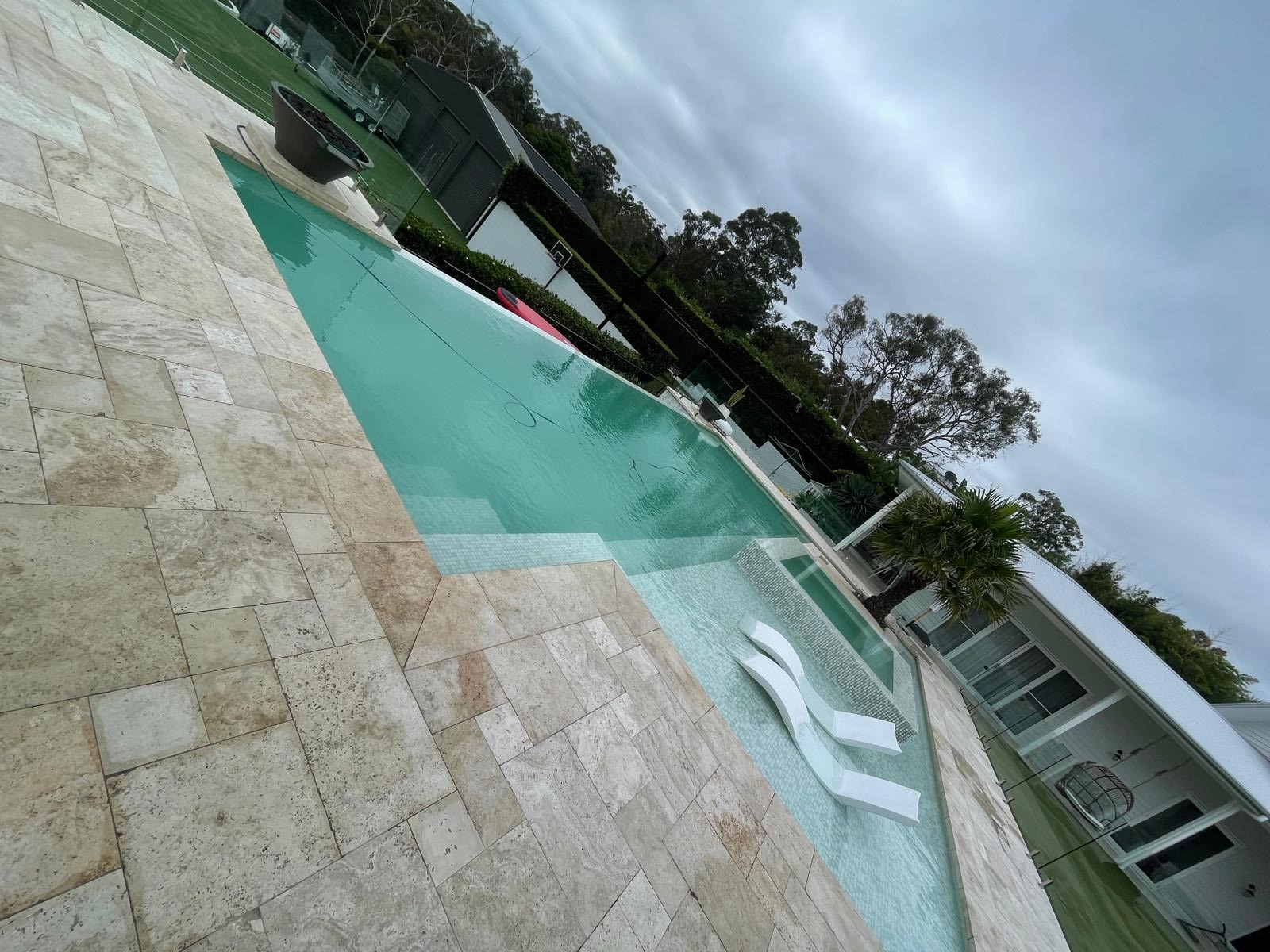
A compact courtyard plunge pool in Prahran and a tree-surrounded 60,000-litre family pool in Park Orchards are both 'residential pools', but they bear almost no resemblance in the work involved. Genuine pricing starts from your pool, not a rate card — which is exactly how we quote.
The factors that actually drive the price
When we assess a pool for a maintenance quote, these are the variables that matter:
- Pool size and volume — more water means more time and more chemicals
- Current condition — a healthy pool is faster to maintain than one being brought back
- Surroundings — overhanging trees and wind exposure add cleaning time
- Visit frequency — weekly visits cost more per month but less per visit than crisis call-outs
- Access — tight side access or stairs affect service time
- Equipment age and type — older systems need closer monitoring
What's usually included (and what isn't)
A typical professional maintenance visit covers the service itself: testing, balancing advice, cleaning, baskets and an equipment check. What varies between providers is whether chemicals are included — in our case, chemicals are always itemised separately and discussed before we add anything, so you never pay for product you didn't approve.
Repairs, replacement parts and new equipment sit outside maintenance entirely and are quoted separately. Be cautious of any arrangement where 'everything's included' — the cost has to live somewhere, and it's usually in inflated service fees or corner-cutting.
The real cost comparison: maintenance vs neglect
The most useful way to think about maintenance pricing is against what it prevents. A skipped season of care routinely produces a green pool recovery, a scaled chlorinator cell, or a failed pump — any one of which costs more than a year of regular visits.
Balanced water is also equipment insurance. Corrosive water quietly eats heater exchangers and pump seals; scaling water chokes chlorinator cells. Owners who maintain properly routinely get years more service from the same equipment — that difference alone usually exceeds the maintenance cost.
DIY vs professional: the honest maths
Doing it yourself saves the service fee, and for engaged owners with simple pools it can work. The realistic costs of DIY are your time (an hour-plus weekly, done properly), chemicals, testing gear, and the risk of mistakes — over-dosing, under-dosing, or missing early equipment warnings.
Where DIY maths usually breaks down is the first mistake: a misdiagnosed pump, a bleached surface from incorrect chemical handling, or an algae bloom from a fortnight's inattention. Professional maintenance is less a luxury than a risk-transfer — the pool stays right, and problems are caught while they're small.
What about one-off services?
Not everything is a maintenance plan. One-off cleans before events or inspections, green pool recoveries, equipment repairs and heater installations are all priced on the job itself. One-off pricing depends on the pool's condition and the work involved — a tidy pool needing a pre-party polish is a very different job to a pool that's been sitting for a year.
Green pool recovery deserves its own note: the price depends heavily on severity, pool volume and how much chemical treatment and filtration time the recovery needs. Photos tell us most of what we need — a murky light-green pool and a black swamp are different jobs entirely, and we quote them accordingly.
Melbourne water and seasonal cost swings
Melbourne's mains water starts relatively soft and clean, which works in pool owners' favour — less correction needed after top-ups than in hard-water regions. The bigger local cost variable is seasonality: summer pools consume two to three times the chlorine of winter pools, and autumn's leaf drop adds cleaning time on leafy blocks.
A maintenance quote that holds steady all year is convenient, but expect the chemistry side of your pool budget to breathe with the seasons. It's normal, and a good technician will tell you when and why consumption changes rather than letting bills drift unexplained.
Questions worth asking any pool company
However you choose, these questions quickly reveal who you're dealing with. What's actually included in a visit? How are chemicals charged? Will I get notes or photos after each visit? Who turns up — the same technician or whoever's available? And what happens when something needs repair — do you diagnose, or just refer it out?
Clear, confident answers to those five questions matter far more than a headline number. A slightly cheaper service that skims and leaves is the most expensive option on the table once the missed problems surface.
Chemicals, parts and the hidden extras
Service fees are only part of a pool's annual cost, and understanding the full picture prevents bill shock. Chemicals are the main recurring extra — a well-maintained pool uses modest amounts, while a neglected pool consumes chemicals in expensive bursts. Keeping balance steady is itself a cost-saving strategy.
Then there's the equipment lifecycle: chlorinator cells wear out over years, filter media needs periodic replacement, pump seals eventually weep. None of these are avoidable, but all of them are cheaper when caught early and planned for rather than discovered as failures. A service that includes equipment checks converts surprise breakdowns into scheduled, budgeted maintenance.
Why 'cheap monthly splash-and-dash' costs more
The budget end of pool servicing works on volume: many pools, minimal minutes, no testing depth. It looks like a saving until the pattern reveals itself — chemistry that's never quite balanced, equipment that's never inspected, and a technician too rushed to notice the early warning signs that make pool care cheap.
The corrective bills arrive eventually: the recovery clean, the replacement cell, the pump that failed two years early. When comparing maintenance prices, compare what's delivered per visit, not just the figure — the difference between testing and guessing is where the real money hides.
Pool age, equipment age and long-term budgeting
A new pool with modern equipment is cheap to keep; a fifteen-year-old pool with original equipment is entering the season of replacement cycles. Neither is a problem — but they shouldn't be budgeted the same way. If your equipment is ageing, a sensible approach is to ask your technician at each visit what's likely to need attention in the next year or two, so replacements land as planned expenses rather than mid-summer emergencies.
We build that forward view into our visit notes — what's healthy, what's ageing, and what's worth budgeting for — because pool ownership is far cheaper when nothing surprises you.
How to get an accurate quote for your pool
The fastest path to real numbers: request a quote with your suburb, pool details and a few clear photos of the pool and equipment. We review everything, ask anything we need to, and provide a personalised quote based on your actual pool — then you're comparing something real.
If you're comparing providers, ask each one what's included in a visit, how chemicals are charged, and whether equipment checks are part of the service. The answers reveal far more than the headline price.
Talk to Melbourne's pool care specialists.
Cleaning, maintenance, equipment repairs and heater installation across Greater Melbourne.